


QUICK BRIEF
What You Will Learn
- 01
Number of participants
- 02
Type and number of vehicles
- 03
Drivers
CONTENTSTable of Contents
- 01Information Needed for the Transportation Plan
- 02Decide Whether a Separate Luggage Vehicle Is Needed
- 03Make Driver Workload Clear
- 04Build the Transportation Plan for Each Vehicle
- 05Plan for Vehicles to Become Separated
- 06Share the Drop-Off and Unloading Procedure Before Arrival
- 07Reconfirm the Return-Trip Driving Plan Before Activities End
SECTIONInformation Needed for the Transportation Plan
Number of participants
Type and number of vehicles
Drivers
Passenger capacity
Amount of luggage
Meeting and dismissal locations
Rest stop locations
Required arrival time
Create a Passenger and Vehicle Assignment List
List each participant’s name, vehicle, driver, contact information, and luggage responsibility. Note anyone joining or leaving partway through the trip, and conduct a headcount before departure.
SECTIONDecide Whether a Separate Luggage Vehicle Is Needed
When sports equipment is bulky, passenger capacity may be sufficient while luggage space is not. Do not force people and equipment into the same vehicle; confirm the loading method and secure the load.
Boarding and Unloading at the Accommodation
Vehicle sizes that can enter
Drop-off and pick-up location
Time needed to unload luggage
Parking location
Idling and nighttime noise
Vehicle order at departure
Communication During Bad Weather or Delays
Assign a contact person in each vehicle and centralize delay reports to one point. Avoid asking drivers to operate phones while driving; a passenger should handle communication.
Do Not Plan Vehicles by Seat Count Alone
Even when the passenger count is within capacity, loading luggage may reduce rear visibility or room for boarding and exiting. Estimate people, sport-specific gear, and personal luggage separately, and record what is loaded in each vehicle on both the passenger list and loading list.
SECTIONMake Driver Workload Clear
For long-distance driving after work or practice, prioritize breaks and driver changes over arriving exactly on schedule. Decide driving segments, rest stop locations, substitute drivers, and who contacts the facility if arrival is delayed. Anyone who drinks alcohol should be removed from the return-driving assignment.
| Planning Sheet | Information to Record |
|---|---|
| Passenger List | Name, vehicle, seat, contact information |
| Loading List | Gear, quantity, vehicle, person in charge |
| Itinerary | Departure, rest stops, fuel, arrival |
| Emergency Sheet | Contacts for breakdowns, delays, or illness |
Confirm Large-Vehicle Conditions Individually
A bus or minibus cannot be judged from parking information for standard cars alone. Confirm access roads, turning space, boarding and alighting, luggage unloading, and overnight parking with both the accommodation and venue, and share destination information with the transportation operator as well.
SECTIONBuild the Transportation Plan for Each Vehicle
In addition to the overall meeting time, assign a driver, designated passenger, occupants, luggage, departure point, and contact information for each vehicle. Do not assume all vehicles will stay together in one line; every vehicle should have enough information to reach the destination independently.
| Management Sheet | Information to Include |
|---|---|
| Passenger List | Name, vehicle, seat, person in charge |
| Driver Plan | Driving section, change point, rest |
| Loading List | Gear, quantity, vehicle, person collecting it |
| Arrival Sheet | Destination, parking, boarding or alighting, meeting point |
Do Not Separate Driver Workload From the Training Schedule
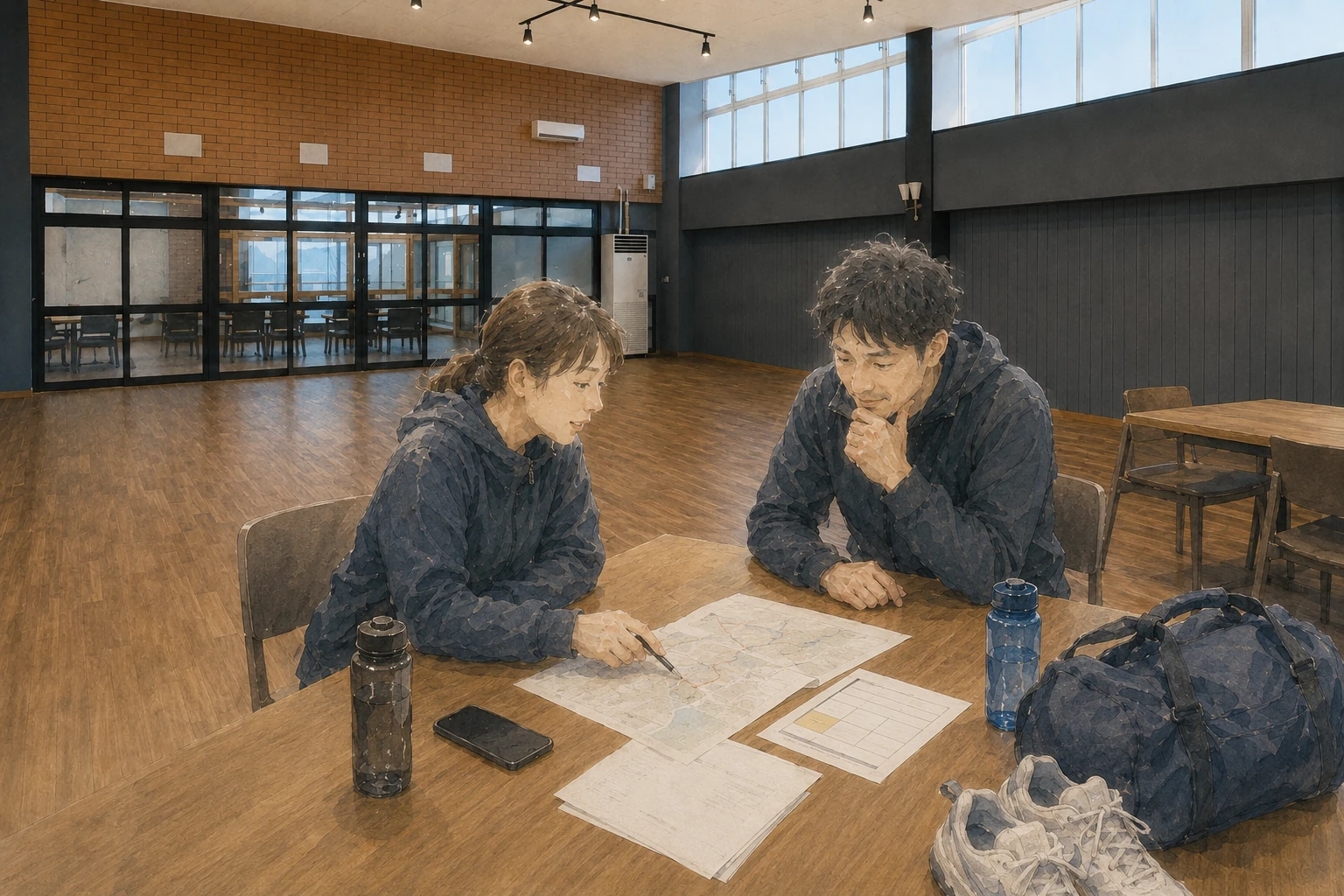
A plan where a coach drives a long distance, immediately leads practice, and then drives again afterward concentrates the burden. Review driving time, activity time, sleep, and alcohol consumption as one continuous schedule. If the load is unrealistic, consider relief drivers or arriving the previous day.
SECTIONPlan for Vehicles to Become Separated
If vehicles become separated by signals or rest stops, the plan should not require them to rush to catch up. Share maps, the destination address, emergency contacts, and meeting points with every vehicle, and decide where delayed vehicles can safely rejoin the group.
SECTIONShare the Drop-Off and Unloading Procedure Before Arrival
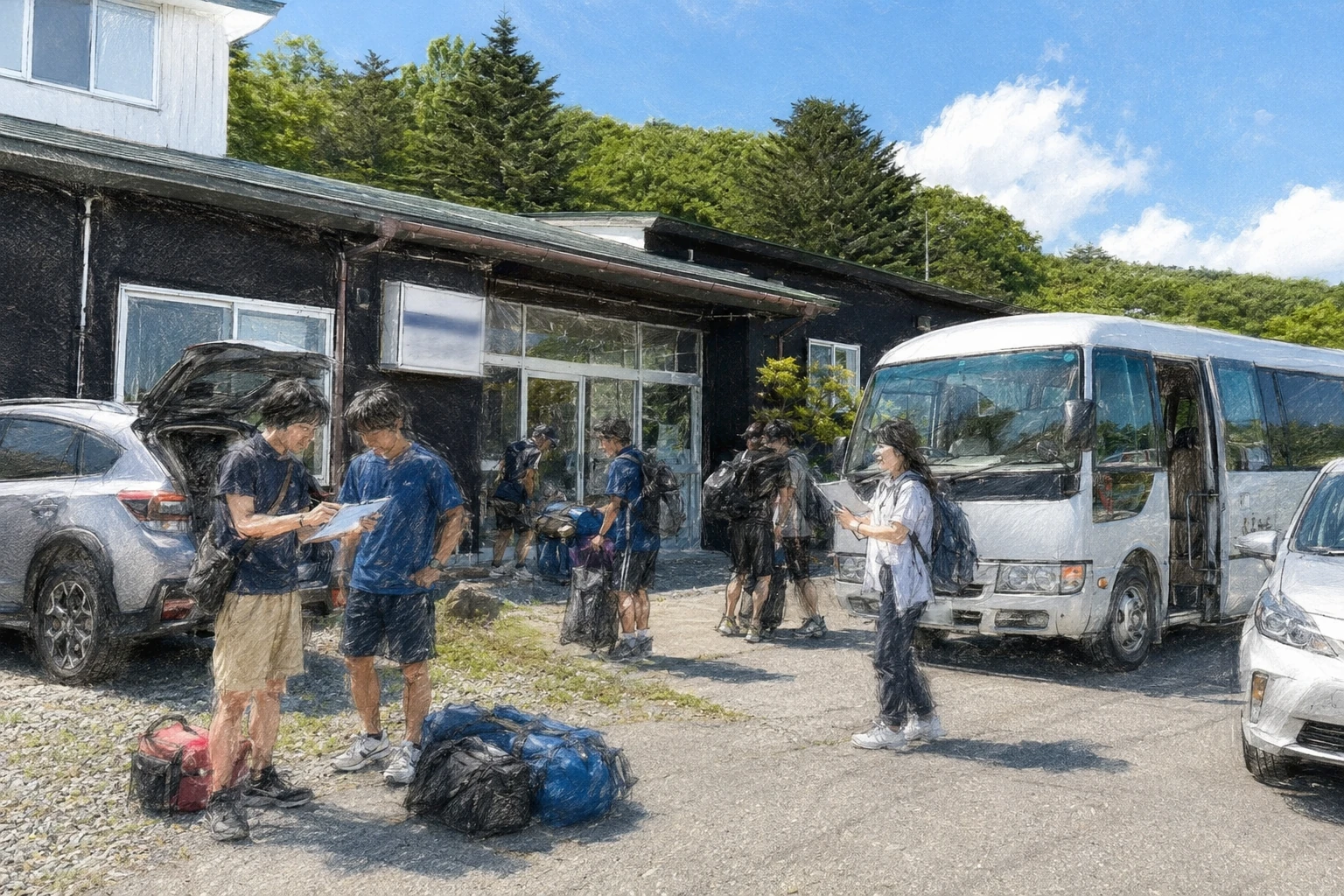
If everyone gets out at once in a tight space, people and luggage can cross paths. Have the person in charge first confirm reception and the designated drop-off area, then decide the order for participants, hand luggage, and large sports gear. Assign a designated passenger to manage participants even while the driver is parking the vehicle.
| Arrival Step | Person in Charge |
|---|---|
| 1. Safety Check | Responsible person confirms entrance, parking, and facility contact |
| 2. Participants Exit | Designated passenger gathers the group and conducts a headcount |
| 3. Unloading | Separate gear and personal luggage using the loading list |
| 4. Vehicle Movement | Driver parks in the designated location |
SECTIONReconfirm the Return-Trip Driving Plan Before Activities End
If weather, fatigue, or an extended match makes the original plan difficult, decide whether to add breaks or change drivers. Prioritize returning safely over returning exactly as originally scheduled.
Choose Actual Rest Stop Locations, Not Just Time Intervals
A rule such as “take a break every 2 hours” may still miss a suitable stop depending on road conditions. Confirm primary and backup stop locations, fuel, toilets, and whether large vehicles can park, then share them with drivers before departure. Pay attention to opening hours in winter or at night.
FROM READING TO PLANNING